Flipped Learning – How to Successfully Flip Your Math Class
Introduction
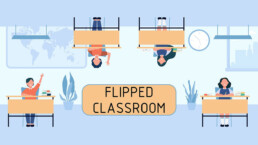
Successfully flipping your math class requires careful planning, organization, and proper implementation. As such, this guide is designed to help make your flip a success. Whether you are entirely new to flipping your class or just looking for new ideas this is the place for you! In this blog post, we will discuss some tips on how to successfully flip your math class.
Teach Students How to Watch Videos and Take Notes

When I first implemented Flipped Learning, I made the mistake of assuming that students knew how to watch math videos and take notes; I mean how hard can it be, right? I quickly learned however that students did not know how to watch instructional videos. Oftentimes students would attend class the very next day not remembering what they learned the night before. As such, I had to quickly adapt to ensure students were really benefiting from the videos.
I would suggest that at the beginning of the year you teach students how to watch the videos and successfully take notes. This means that for the first couple of days I would encourage you to complete the homework with them in class. Put the video on the smartboard and periodically pause the video and encourage students to take notes. I use the platform Playposit which allows teachers to assign videos to students and monitor their success. When assigning these videos, there is a pause feature that allows teachers to pause the videos for the students. I would strongly encourage you to take advantage of this wonderful feature.
Choose Engaging Video Content

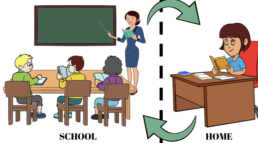
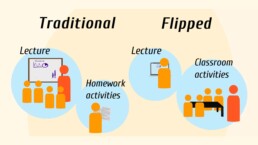
In Flipped Learning, students watch videos of lectures at home. Therefore, when selecting videos for Flipped Learning, it is important to consider the following factors:
- The quality of the content: Look for videos that are well-produced, fun and provide clear explanations.
- The length of the video: Choose a video that is an appropriate length for the lesson. Students should be able to watch the entire video in one sitting. Videos more than 10 minutes long should be avoided.
- The level of difficulty: Make sure the video is challenging enough to keep students engaged, but not so difficult that they become frustrated.
By considering these factors, you can choose videos that will help students learn math in a flipped classroom setting. If possible, create your own videos for students to watch. This will create a greater experience for the student.
Teach Students How to be Independent Learners

Flipped Learning can help students become more independent learners. When students are responsible for their learning, they are more likely to take ownership of their education and be invested in their success. As a result, Flipped Learning is an ideal way to teach students how to be independent learners.
During class work, students will often ask questions or ask for my assistance. Although I am always inclined to help, as all teachers are, it is important to teach students how to successfully search for answers. For most questions that do arise, the answers can easily be found in their notes. As a teacher, I think it is essential to teach students how to learn and this strategy does just that.
Create Different Groups For Every Class

We live in a world where work is increasingly completed in groups. From school projects to office collaboration, it’s important to be able to work well with others. One of the key aspects of Flipped Learning is that it provides opportunities for students to work in small groups. This is especially important in math class where students often need extra help understanding complex concepts. Creating different groups for each class is also essential to ensure students have a chance to work with different peers and receive the help they need. In addition, it gives students the chance to practice their problem-solving and teamwork skills with different classmates.
One way I ensure students are placed in different groups for every class is by using Team Generator. You can decide whether you have students sit in their groups upon entry or only during group work. Ideally, you will want students sitting in groups of three during class time. Even during individual work, you should always encourage students to help each other.
The Effective Use of Vertical Non-Permanent Surfaces

Flipped Learning has become a popular instructional method in recent years, with many teachers using it to great effect in their classrooms. One key reason for its success is the use of whiteboards. When used effectively, whiteboards can help to engage students and provide a more interactive learning experience. They also allow teachers to quickly and easily illustrate concepts, making them an invaluable tool for math instruction. In Flipped Learning classrooms, whiteboards are often used by the students to present their solutions to the problems. This allows students to receive immediate feedback and guidance when they need it most.
At the beginning of the year, I ensure that there are eight whiteboards hanging on the walls of the classroom. One year I even got creative and used the windows as whiteboards since there was not enough wall space. I then assign different groups with no more than three students in each group. Every time a question is presented students use their respective whiteboards to showcase their solutions. It is important to note that there should only be ONE writer in each group. The idea here is to encourage students to work together to solve problems. The two other students are therefore communicating the solution to the writer.
Communication

Flipped Learning has been shown to be an effective method of instruction, and one of the key reasons for its success is the increased communication between students and teachers. When students are able to share their solutions with each other, they are able to learn from their mistakes and develop a deeper understanding of the material. In addition, when students are able to communicate math solutions to each other, they are more likely to retain the information and be successful in class.
One way I ensure students are always interacting with each other is by ensuring group work takes place regularly. As a teacher, the focus should be on what the students are communicating to each other. As such, I spend class time visiting each group ensuring they are effectively communicating with each other.
Conclusion
Flipping your math class can be a great way to engage students and help them learn the material. However, there are a few things to keep in mind when flipping your class. We hope these tips will help you get started with Flipped Learning and significantly improve student engagement and success. Have you tried flipping your math class? What techniques have worked best for you? Let us know in the comments below!